

History of Rowing Victoria Inc
- Introduction
- 1: Rowing in a young Victoria 1838-1859
- 2: Formation of the Association 1860-1875
- 3: Growth of the Sport 1876-1889
- 4: Years of great success 1890-1899
- 5: The rise of Australian Henley 1900-1909
- 6: The War Years 1910-1919
- 7: Women's rowing and the modern era 1920-1929
- 8: The Depression Rebuild 1930-1939
- 9: War and rebuilding 1940-1949
- 10: Expansion years 1950-1959
- 11: The search for international success 1960-1969
- 12: Combining the Associations and lightweight success 1970-1979
- 13: The new national program 1980-1989
- 14: Golden years 1990-1999
- 15: Professionalism 2000-2009
- 16: Yet More Growth 2010-2019
- 17: Changing Times 2020-2026
- 1: Life Membership and other important awards
- 2: Patrons and Presidents
- 3: Office Bearers
- 4: Clubs and their histories
- 5: The Oarsmen's Centotaph and WWI Roll of Honour
- 6: WWII Roll of Honour
- 7: Premierships
- 8: State Championships
- 9: Hall of Fame Inductees
- 10: Victorian Olympians
- 11: International representation
- 12: Intercolonial and Interstate Racing
- 13: School rowing
- 14: University rowing
- 15: Histories of Victorian Rowing
- 16: Annual Reports
This chapter is under construction
Chapter 12 page 1 2 3 4
The hall marks of this decade were the success of Victorian lightweights both domestically and internationally, and the work towards the merging of the men's and women's associations in 1981.
During the 1970s, more government funding of sport began. One of the requirements of government and society at that time was that there should only be one association for each sport receiving any government support and that men and women should be treated equally. This was a not a controversial matter for nearly all and was occurring throughout the world. The first World Championships for women took place in 1974, and women raced for the first time at the Olympic Games in 1976. In Australia, the 1976 National Championships were a fully combined but the men's and women's national associations were not merged until 1980. In Victoria, this was not undertaken until the end of 1981 season and not formalised in the constitution for another year. However all the work was done in the last part of the 1970s.
Victorian lightweights showed Australia and the world their high skills with the introduction of FISA and World Championships. In particular, the fierce competition between Melbourne University and Mercantile led to many years of success both locally and internationally.
The men's Association celebrated it's centenary in 1976.
1969-70
Fine displays of rowing prowess were seen amongst Victorian athletes at home and abroad this season.
Early on in the season, a team from Melbourne University Boat Club made a successful visit to Japan and rowed in the All-Japan Championships.
The Victorian Men’s Eight won the King’s Cup for the 15th time in the 25 times it has been competed for since the Second World War. Rowing enthusiasts and spectators alike were in agreement that, the last 500 metres of the race, which saw Victoria sprint to the line marginally ahead of South Australia and Tasmania, was one of the most exciting displays of rowing they had seen in quite some time.
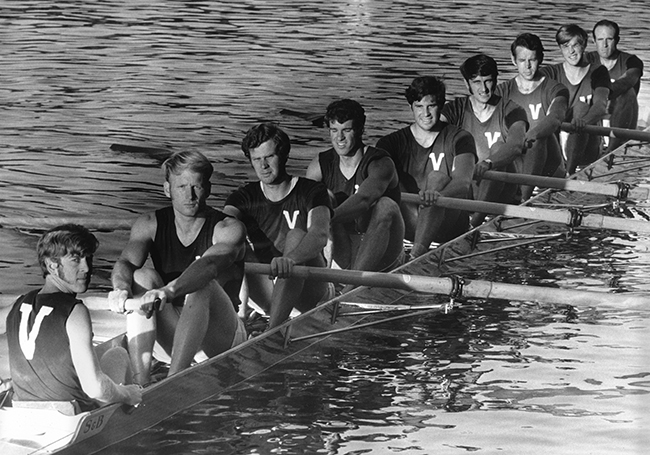
Victorious King's Cup Eight
Bow: David Bishop, 2: John Shanassy, 3: Kerry Jelbart, 4: Paul Guest, 5: John Harry, 6: David Douglas, 7: Stephen Gillon, Str: Graeme Boykett, Cox: Geoff Godkin, Cch: David Boykett
The Victorian Women's Lightweight Four also won the Victoria Cup comfortably by 1 3/4 lengths.
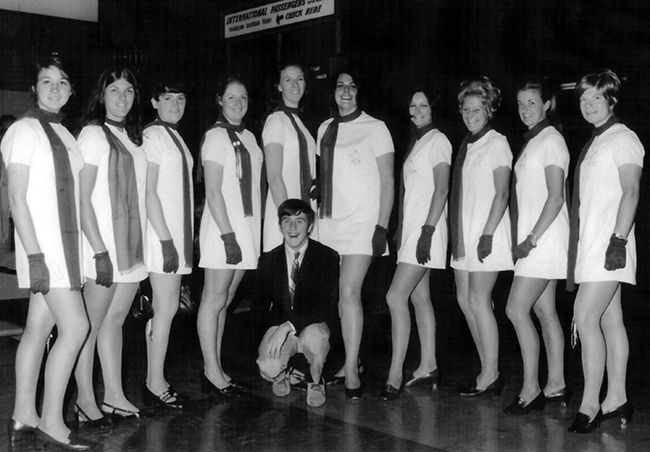
Victorian Women's Team depart for Queensland - lightweight four on the right hand side
Lightweight Four: Bow: Lesley Roberts, 2: June Thorne, 3: Kath Suhr, Str: Sue Bartlett, Cox: Alf McLaren, Cch: Roy Sutcheon
At the National Regatta, held at New South Wales, Victorian crews were triumphant in the Championship Pair with and without coxswain, school fours and school eight events.
In the competition for State Premierships, Mercantile Rowing Club had the honour of winning both the Senior and Junior Premierships. Barwon Rowing Club claimed the Lightweight and Country Premiership, a fitting way to celebrate their Centenary Year.
Richmond Rowing Club and her members showed courage and determination to immediately commence alleviatory actions to ensure rowers return to the water as soon as possible, after a fire late in the season destroyed the shed and much of the fleet.
Wesley College equalled the course record of 4:31.4 to win at the APS Head of the River Regatta, defeating Geelong Grammar School by a Canvas in a thrilling finish.
The Australian Universities Championships produced good results for the Victorian students with Melbourne University taking out the men's pair and eight, the men's lightweight four, and the women's four. At this stage, there remained two regattas, one for men and one for women.
At the 1980 Annual General Meeting, the Association elected long serving Honorary Treasurer Noel Wilkinson a Life Member. Noel's contribution to the finances of the Association from 1960 to 1978 went well beyond keeping the finances in order. He was a prolific fund raiser for the Association building up the Interstate Fund and creating the International Fund. Both funds are still in use today supporting Victorian rowers. Noel was the first Life Member of the Association and so it is a credit to him that his contribution to the Association was so significant that such elections were required.
1970-71
The 1971 season saw talented Victorian oarsmen display fine performances in the Interstate and International Scene.
At the beginning of the season, Victorians made up many places on the Australian Team at the World Rowing Championships in St. Catherines, Canada. Graeme Boykett, Stephen Gillon, David Douglas, and John Shanasy from Mercantile Rowing Club, along with Paul Guest, from Banks and Kerry Jelbart from Monsash University, with coxswain Geoff Godkin featured in the Men’s Eight. George Xouris and Jeff Watt of Corio Bay rowed in the Coxless Pair’s Event. David Boykett and Noel F. Wilkinson had the privilege of being coach and team manager respectively. Although no medals were won, Australian athletes nonetheless rowed valiantly in all events.
The King’s Cup Regatta was held on the Canning River, Perth in April. Victoria cemented their position as the premier state in Australian Rowing, when, trailing the New South Wales crew at the 250m mark, stroke man Kerry Jelbart raised the rating to lead a late charge and cross the line in first place. The final of the Penrith Cup saw the Victorian Crew storm away to an early lead, only to be recalled due to a breakage in another boat. The race was restarted and nonetheless they repeated their display to win by 0.3 seconds from South Australia. Val Bertrand won the Nell Slatter trophy easily from Shirley Graham from Queensland in the Women's Interstate Championships held at Penrith.
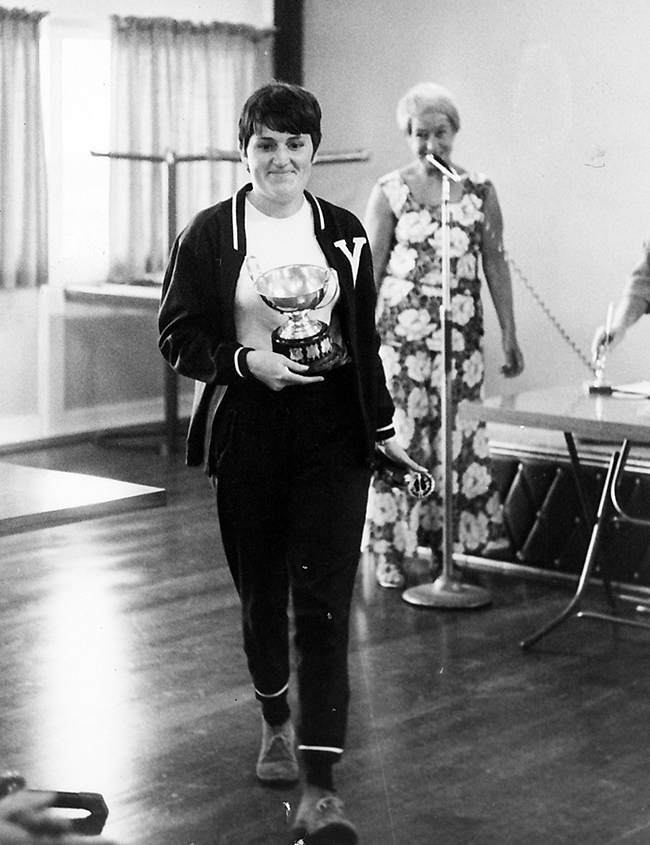
Val Bertrand receiving the Nell Slatter Trophy
At the Inter-Varsity Regatta, Monash University capped their very successful season with a win in the Oxford and Cambridge Cup. At the same regatta in Queensland, Melbourne University Boat Club were successful in retaining the Lightweight Four and Coxless Pair titles.
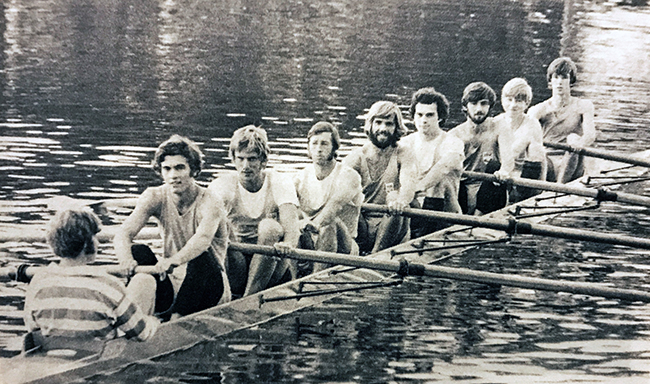
The winning Monash Crew prior to the Championships
In this picture: Cox: Don Hess, Str: John McKeand, 7: Will Baillieu, 6: Mike Kerin, 5: Les Ayres, 4: Dave Johnson, 3: Chris Darling, 2: Geoff Green, Bow: Stephen Jelbart. The crew changed with Sam Mollard rowing in place Dave Johnson and a mirror rig used.
Monash would go on to claim the State Senior Premiership. Powerhouse Rowing Club claimed the State Junior Premiership. Melbourne University won the State Lightweight Premiership, and Barwon Rowing Club were victorious in the State Country Premiership.
Geelong Grammar were victorious at the APS Head of the River Regatta, convincingly beating Xavier College by one and a half lengths.
1971-72
A busy year saw Victorians compete ferociously in National, International and Interstate competitions.
At the King’s Cup Regatta, conducted on the Huon River in Tasmania, the Victorian Men’s Eight lost out to a well put together crew from New South Wales. Spirits stayed high despite this, as the Lightweight Coxless Four led from start to finish to claim the Penrith Cup. The women had more success at their Championships taking out both the four and lightweight four championships.
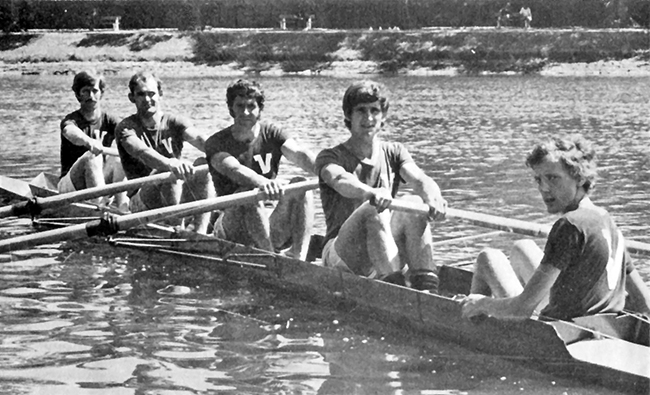
Victorian winning men's lightweight four
From the left: Bow: Alan L Hart, 2: Andrew G McKinley, 3: Jeff R Sykes, Str: T Campbell Johnston, Cox: Robert England
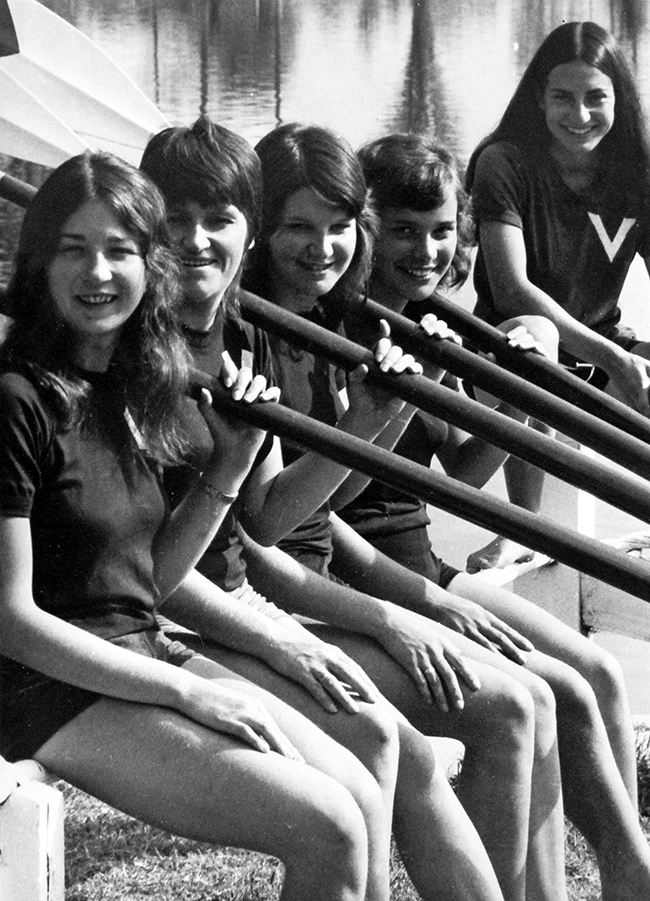
Victorian winning women's lightweight four
Bow: Megan Tonkin, 2: Gail Johnstone, 3: Valmai Bertrand, Str: June Thorne, Cox: Diane Edge, Cchs: Roy Scutcheon & Kath Suhr
The National Regatta this season was held at Petrie, Queensland, in which Victorian crews were successful in winning the Coxed Pair and Lightweight Eight. Two Victorian Oarsmen, Kerry Jelbart and Will Baillieu were selected to represent Australia at the Olympic Games in Munich.
The competition for State Premierships concluded with Mercantile claiming the State Senior and Junior First Division Premierships, Melbourne University winning the Lightweight Premiership and Footscray City Rowing Club taking the Junior Second Division Premiership.
Monash University were successful in their quest to retain the Oxford and Cambridge Cup at the Inter-Varsity Regatta held at Taree, New South Wales. Melbourne University for the fourth consecutive year, were victorious in the Sir Fred J. Schonnell Cup for lightweight fours.
At the APS Head of the River Regatta in April, Wesley College, coached by Mr. Alan Mitchell, fought hand-to-hand with Xavier College and Melbourne Grammar to claim victory.
Early on in the season, tragedy struck Footscray City Rowing Club when a fire levelled the Club’s shed and rowing fleet. Members of the rowing club, the Victorian Rowing Association and generous souls of the rowing community wasted no time in helping with the reconstruction efforts.
As the season drew to a close, members of the Victorian Rowing Community were thrilled to hear the news of a new rowing club being formed at Horsham.
At the 1972 Annual General Meeting of the Association, long serving Honorary Secretary of the Association Norman Cairnes was elected a life member of the Association. Norm had served the Association with distinction as Secretary, Victorian coach and selector. His enthusiasm, accuracy and love of the sport were all evident and used for the benefit of the sport. Norman served in WWII finishing with the rank of Sergeant. He went onto to take leadership roles in the Australia Amateur Rowing Council.
1972-73
This year witnessed notable performances from Victorian Oarsmen on the international and national stage.
At the beginning of the season, two Victorian Oarsmen, Kerry Jelbart of the Men’s Eight and Will Baillieu of the Coxed Four represented Australia at the Munich Olympic Rowing Regatta.
Victoria had two representatives, Jeff R. Sykes and Will R. Liley, selected to compete at the European Championships at Moscow.
This year the King’s Cup Regatta was held at Murray Bridge, South Australia, where the Victorian Men’s Eight were narrowly defeated by a strong crew from Western Australia. The Victorian Lightweight four won their race in style. However the most interesting race was the President's Cup which resulted in a dead heat between Jeff Sykes from Victoria and Ted Hale from Tasmania. Upon the dead heat being announced, the scullers resolved to re-row the event and the referee agreed. In the re-row for first place 1 1/2 hours later, Jeff Sykes won by 5.3 secs from Ted Hale.
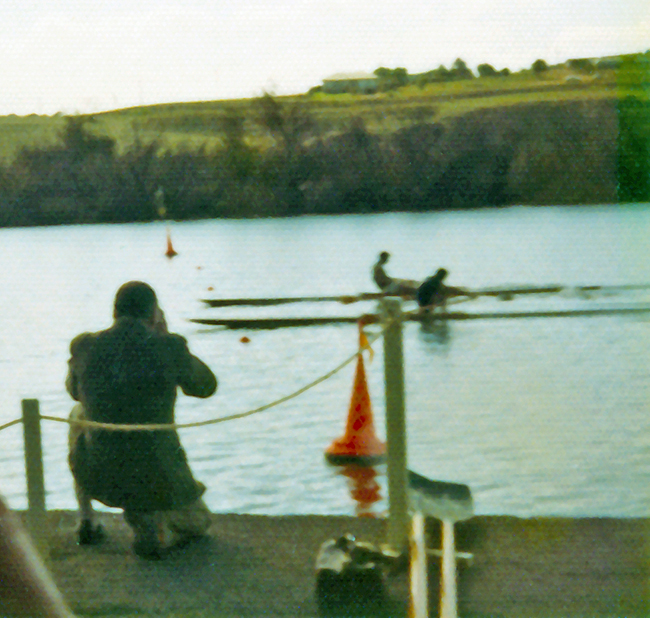
Just after the finish of the President's Cup heat, a dead heat, Sykes closest and Hale on the far side
Photo Terry Phillips
In the battle for State Premiership competitions, Mercantile Rowing Club claimed the Senior Premiership, Banks Rowing Club won the Junior First Division Premiership, Melbourne Rowing Club won the Junior Second Division Premiership whilst Melbourne University Boat Club won the Lightweight Premiership.
At the Inter-Varsity Regatta held at Mildura, Monash University were successful in retaining the Oxford and Cambridge Cup, for the third consecutive time. Melbourne University, on an impressive fifth consecutive occasion, retained the Fred J. Schonell Cup for Lightweight fours, and also the Carlton and United Goblets for coxless pairs at the same regatta.
Notably, the Victorian Rowing Association had the pleasure of welcoming Mr. Thomi Keller, president of FISA, and accompanying West German Rowing Officials along with the Swiss Olympic Double Sculling Crew to Victoria in February. The talented Eight from Scotch College this season were chosen to represent Australia at the upcoming FISA Junior World Championships in Nottinghamshire England.
Shortly before the season drew to a close, Mercantile Rowing Club suffered the great misfortune of having the first floor of their clubhouse destroyed by fire. Unsurprisingly, club members and friends wasted no time in focusing their efforts on rehabilitation of their home grounds. On a more positive note, Richmond Rowing Club, who were without a clubhouse for three years due to a fire, were pleased to move into their new premises around the same time.
At the APS Head of the river on the Barwon, Scotch College under the watchful eye of Mr Don MacMillan, held off the gutsy Xavier College Crew to win by three quarters of a boat length.
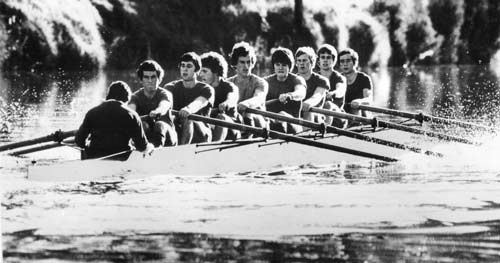
The Scotch crew training for the World Junior Championships
From the left: Martin Aitken, Glenn Robertson-Smith, Stephen Shirrefs, George Low, Doug Buchanan, Bruce Dumbrell, Ian Porter, Stephen Webster, Andrew Guerin
A shadow over the season was that of the Mercantile Rowing Club burning down as a result of an arson attack. The young offender was caught but the club became a guest of other clubs for the season and part of the following season.
1973-74
Regarded as the most exciting and outstanding feature of the season was the presentation of the combined King’s Cup and National Regatta on Lake Wendouree Ballarat over Easter. Not only was the event a roaring success, but was agreed by many to be the most delightful spectacle of rowing since the 1956 Olympics on the same venue. Whilst the Victorian Eight did not reach the final of the King’s Cup, the disappointment was offset by the success of the Lightweight Four in the Penrith Cup. This crew commenced the long period of Australian success in international lightweight rowing, initially in men's event, and then in women's. It is therefore a landmark crew in Victorian and Australian rowing.
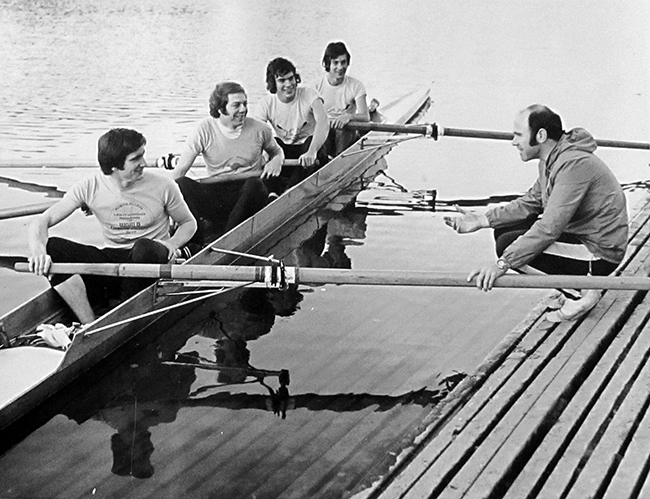
1974 Successful Victorian and then Australian Lightweight four from MUBC with coach Peter Philp
From the left: Cam Johnston, Andrew Michelmore, Geoff Rees, Colin Smith, Peter Philp
The Yarrawonga Rowing Club suffered the unfortunate event of a fire on their premises in November, which left the clubhouse and fleets of boats completely perished. With support from their resilient athletes, friends of the rowing club and the wider Victorian Rowing Community, members resumed rowing without delay and set about the quest for obtaining new premises straight away.
At the culmination of the season, Melbourne University had won the Second Division Premiership whilst Mercantile took home the Junior First Division Premiership and Lightweight Premiership. Essendon Rowing Club won the Junior Second Division Premiership.
It was fitting that, during their Centenary Year, Geelong Grammar could celebrate a win in the APS Head of the River, overcoming a challenge from Melbourne Grammar to win by 3 feet.
On a sadder note, members of the Victorian Rowing Community this year mourned the loss of Mr. Michael S. Williams, familiarly known as “Mick” was president of the Victorian Rowing Association for 20 years and an active member of Mercantile Rowing Club. Mick was notably president of the Australian Amateur Rowing Council in 1956 when the Olympic Rowing Regatta was held on Lake Wendouree. As a licensing lawyer, he was adept at all aspects of liquor delivery in the State. He was also said to equally good at both sides of a bar, delivery and consuming! As a practical man, he was renown for finding solutions to issues and not being a servant to protocols. His replacement was Robert Aitken who was probably the ablest rowing man in the State having been a champion rower, Olympic coach, Olympic umpire, national selector and all done with great competence.
1974-75
The season undoubtedly began on a high for Victorian Rowing when the Melbourne University Lightweight Four created history to win at the World Rowing Championships in Lucerne on the 8th of September. This was the first time lightweight events had been included on the World Championship programme.
Further international rowing, albeit closer to home, took place in New Zealand, where the U23 Victorian Colts competed against crews from New Zealand, New South Wales and Tasmania over three regattas, and displayed some impressive performances.
This year the approach to selecting the King’s Cup crew differed from the norm, when the decision was made to name the coach early and have a squad of oarsmen train under his tutelage for most of the rowing season. At the Interstate Championships held at Lake Kurwongbah, Queensland, Victoria finished third in the King’s Cup, which was won by a strong New South Wales crew. The Victorian Lightweight Four however, were successful in retaining the Penrith Cup alongside the Youth Eight, who put in a spectacular performance to win the Noel F. Wilkinson Trophy. At the adjoining National Regatta, Victorian crews were successful in five events - the Junior Eight, Lightweight Eight, Lightweight Coxless Four, School Eight and School Four.
At the Australian Rowing Women’s Championships on the Canning River in Perth, the Victorian Four, all members of the YWCA Rowing Club, were triumphant in the Four-Oared Championship, and will go on to represent Australia at the World Championships in Nottingham.
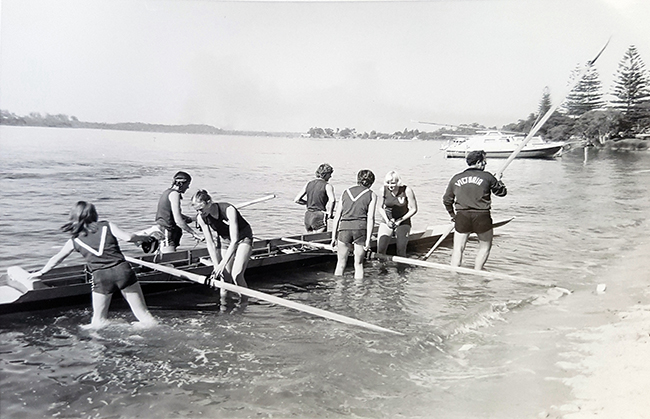
1975 Victorian Four in Perth
Bow: Sally Harding,2: Viv Rowe, 3: Pam Murray, Str: Wendy John, Cox: Jan Coxhead, Cch: Jack Bennett
At the climax of the season, Melbourne University Boat Club claimed the Senior Premiership, Mercantile won the Lightweight Premiership, with Essendon Rowing Club taking the Junior First Division Premiership and Richmond Rowing Club successful in the Junior Second Division Premiership.
Worth highlighting was the honouring of the Victorian Rowing Association’s Vice President Mr. Ray Todd with an award from the Citizens Savings Athletic Foundation of the USA, in recognition of this continuous 56 years of dedication to rowing as a competitor, coach, and team manger amongst numerous other administrative positions. Mr. Campbell Johnston was also accredited with the award for rowing in the Sportsmen of the Year Awards by the Amateur Sports Club of Victoria.
Following a string of unfortunate fires in recent seasons, this season saw Mercantile Rowing Club settle into their new clubhouse, thanks to the rebuilding efforts of club members.
Geelong Grammar School were victorious in the APS Head of the River Race for the second year running.
1975-76
1976 marked historical performances from Victorian crews and landmark moments for the Victorian Rowing Association.
The Melbourne University Boat Club Lightweight Coxless Four made history when they became the first Australian crew to win two medals at the two World Rowing Championships, when, having won the Gold Medal at Lucerne in 1974, the identical crew won the Bronze at the 1975 World Rowing Championships at Nottingham, England, the best performance of the Australian team.
The combined King’s Cup and National Australian Regatta took place at New South Wales, and was significant for the inclusion of the Australian Women’s Rowing Championships for the first time since 1920. The Victorian Eight finished in commendable second place behind a tidy New South Wales Crew, whilst the Victorian Lightweight Coxless Four, this time a Mercantile four, winning again, and the Youth Eight retained the Noel F Wilkinson Trophy. Upon the conclusion of the National Regatta, Monash University Rowing Club claimed the Senior Premiership, Banks Rowing Club took the Junior First Division Premiership, while Albert Park Rowing Club won the Junior Second Division Premiership and Mercantile won the Lightweight Premiership. A new Premiership was introduced for Veteran Oarsmen and was won by Banks Rowing Club.
This year marked the end of an era of rowing when Mr. Ray Todd, a mythical figure in Victorian Rowing, made the decision to retire after 58 years of involvement with every aspect of the sport. At a testimonial dinner, organized by Ballarat Rowing Club, Ray Todd was honoured by oarsmen from all over Victoria and was wished a healthy and prosperous retirement. At the 1976 Annual General Meeting of the Association, Ray Todd was elected a Life Member of the Association. Ray had been a champion Victorian rower, coach, team manager and selector. He was however best known as sports journalist. Ray was an innovator in all these roles. As an innovative and technical coach, he influenced a change in coaching techniques. His focus on rowing drills mirrors coaching techniques of today. He was also an innovator as an administrator, particularly as a team manager and selector. As a sports journalist, he changed the focus of the story to the individual rather than the race and the results - he was one of the first sports journalists to do so. Ray Todd was affectionately known as ‘Mr Rowing”.
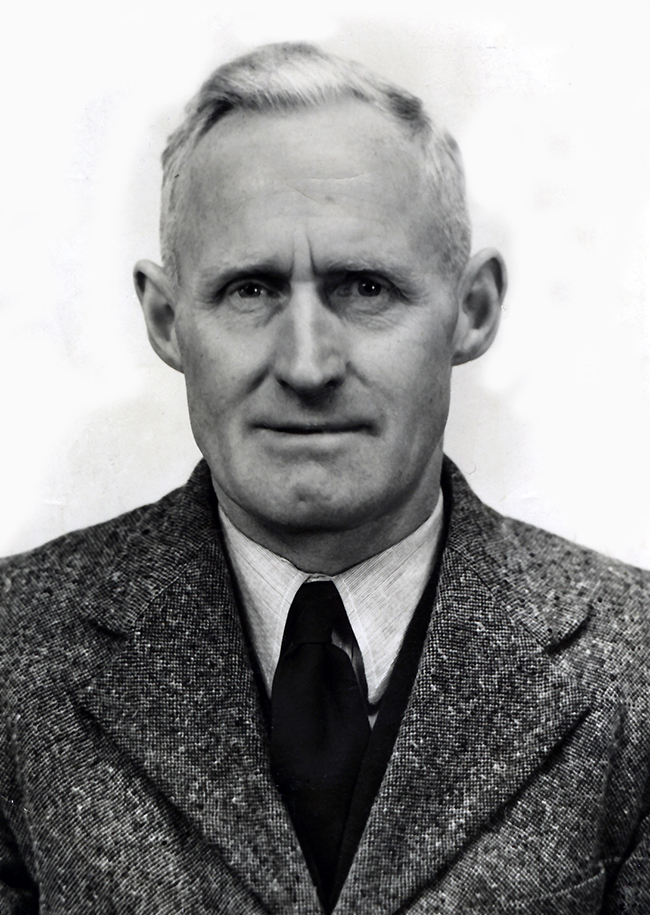
Ray Todd
Mr. Andrew Michelmore was appointed the 1976 Victorian Rhodes Scholar and was also acknowledged for his efforts in rowing at the Sportsmen of the Year Awards by the Amateur Sports Club of Victoria.
Geelong College celebrated their first in 16 years at the APS Head of the River, finishing in a time of 4:44.6 ahead of Geelong Grammar and Brighton Grammar Schools. This also being the first Head of the River final in 15 years featuring Brighton Grammar.
1976-77
The most memorable aspect of this season was undoubtedly the many events and celebrations that took place across Victoria to commemorate the Victorian Rowing Association’s Centenary. Firstly, a memorable Dinner Dance was held at the Leonda Restaurant, in the presence of His Excellency the Governor of Victoria, Sir Henry Winneke and Lady Winneke. Mr. Field G. Rickards undertook the Herculean task of preparing the booklet, “Rowing in Victoria- the First 100 Years of the Victorian Rowing Association 1876-1976” in time for the VRA Centenary Regatta.
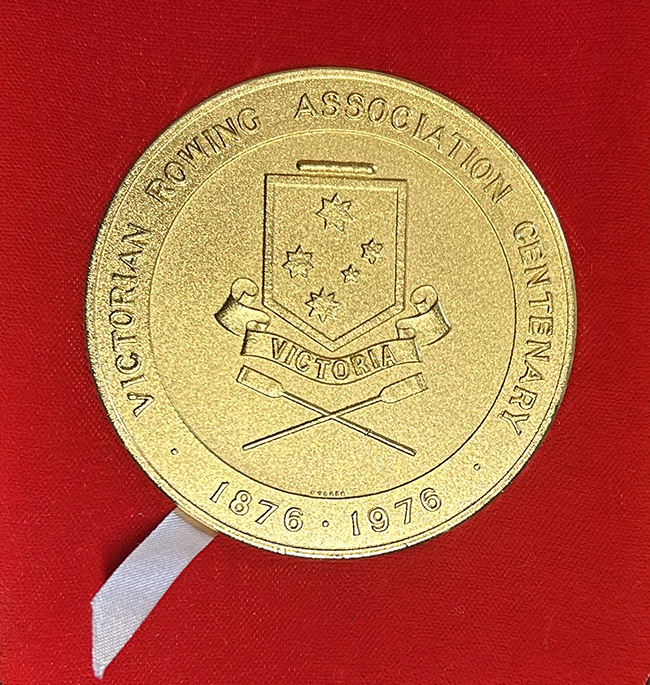
The Centenary Regatta was well organized and a huge success, in which members of the winning crews and their coaches were presented with specifically struck Centenary Medallions by the Governor of Victoria. The following day, Centenary Combination Eights were put together and raced over the Princes Bridge course, competing for trophies donated by Mr. N. F Wilkinson. As a souvenir of the Centenary, 102 gold plated commemorative medallions were created, one being kept for the archives of the Association, one to be presented to the Governor of Victoria, and 100 to be sold to eager supporters of Victorian Rowing. The celebrations finished with the conducting of the Saltwater River Centenary Banquet and Regatta at Footscray commemorating the first “Melbourne” Regatta staged by the association.
The Victorian Rowing Association was also honoured to receive the oar wielded by Dr. Clive Disher when he stroked the No. 1 Australian A.I.F eight-oared crew to victory when it won the King’s Gold Cup at the Allied Services Peace Regatta at Henley on Thames in 1919. The oar, which is inscribed with the names of the successful crew, is kept in the Amateur Sports Club of Victoria for safe keeping.
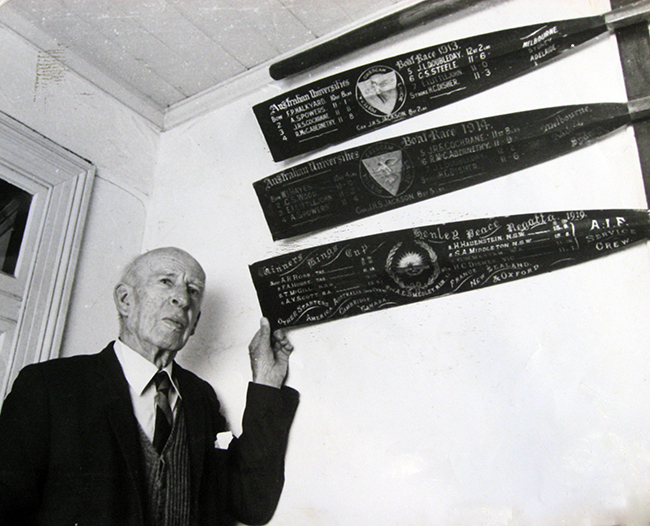
Clive Disher with his 1919 oar
On the international stage, Victorians proudly represented Australia at the 1976 Olympic Games, and following on from this, a Lightweight Eight based on the successful crew from Mercantile, and a Lightweight Four from Melbourne University Boat Club were selected to race for Australia at the World Championships in Amsterdam.
The APS Head of the River Regatta was conquered by Wesley College, winning by half a length from Geelong College in a time of 4:22.6, a new course record.
1977-78
The 1978 season saw Victorian Lightweight rowers riding the crest of a successful wave of performances. At the World Rowing Lightweight Championships in Amsterdam, Victorian Oarsmen made up the majority of the lightweight team, which took home a Silver Medal in the Coxless Four, Bronze Medal in the Eight, and a further bronze in the Single Scull. This made Australia the most successful lightweight nation at the Championships.
Of note was the inclusion in the lightweight four of Peter Antonie and Simon Gillett, two champion rowers who would make their mark on both Victorian and Australian rowing. With one exception, the lightweight eight was all Victorian and was coached by Association Vice-President Hubert Frederico. National selector and Victorian James Howden was appointed Chairman of the national selection committee.
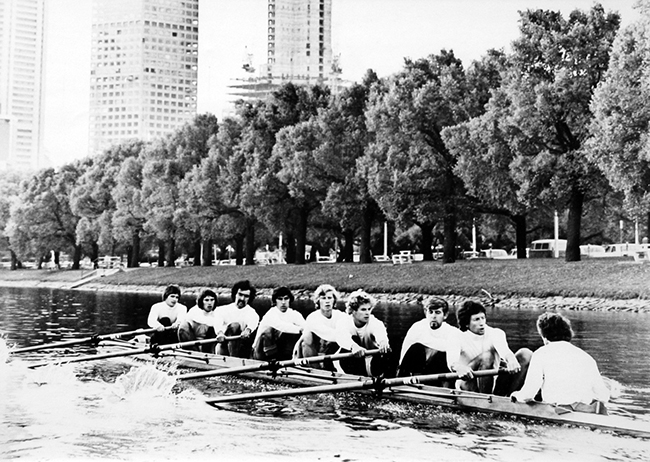
The Australian Lightweight Eight training in Melbourne
From the left: Phil Gardner, Malcolm Robertson, Phil Ainsworth, Rod Stewart, Ian Porter, Alan De Belin, Dick Garrard, John Hawkins, David England
The Victorian Lightweight Four continued its dominance of the Penrith Cup at the combined King’s Cup and National Regatta on the Huon River at Franklin, Tasmania, an event which attracted record entries. Worth noting is that at the National Championships Victorian Crews were successful in winning the Lightweight Eight and Coxless Four, further demonstrating the strength of Victorian Lightweight Rowing.
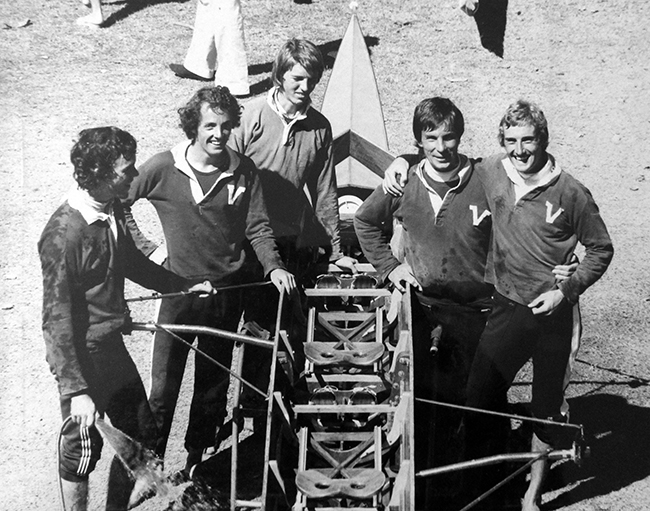
Victorian and Australian Lightweight Four
left to right: Geoff Rees, David England, Peter Antonie, Colin Smith and Simon Gillett
Finally, in memory of the David S. Stirling, the members of Lodge Henley presented to the Victorian Rowing Association a trophy which is to be awarded annually to the winners of the Victorian Champion Lightweight Four event. David rowed prior to WWII and served in the Battle of Greece. He was captured in Crete and spent the rest of the war as a prisoner. After the was, he served on the VRA committee as the delegate for Yarrawonga, was clerk of scales at the 1956 Olympic Games and at all Victorian regattas following the formation of the Victorian Officials Panel. He was a tireless supporter of rowing, and like his wife, was a gentle and kind soul. A true gentleman who was loved by all.
At the VRA Regatta, in commemoration of the 25th year of Queen Elizabeth II’s reign as Monarch, winning crews were presented with trophies marking the Queen’s Silver Jubilee.
Significant rowing promotions were carried out by the Association early in the season. At the World Sports Expo staged at the Exhibition Buildings in Melbourne, the rowing stand was run by members of the Victorian Rowing Association. Over 70,000 people who visited the show had the opportunity to try rowing and receive expert tuition. Each evening, representatives from affiliated women’s clubs staged exciting match races on the rowing ergometers and on the final day of the Exhibition, the last match was one of the highlights of and rowed before a capacity crowd in the Western Annex Arena. Presentations to the winner were made by Mr J D L Lush, General Manager of GRE Insurance.
At the APS Head of the River Regatta on the Barwon River in Geelong, Scotch College won the title by a meter in a thrilling race against Melbourne Grammar. This was the first title for coach David Boykett’s crew since assisting Don Macmillan in 1973.
1978-79
At the Lightweight World Rowing Championships in Copenhagen, the predominantly Victorian Team won Bronze Medals in the Lightweight Eight and Four events. The World Rowing Championships held on Lake Karapiro, New Zealand was aptly descried by Thomi Keller, President of F.I.S.A, as the greatest rowing regatta he could recall.
The highlight of the season was undoubtedly the King’s Cup and National Regatta, which took place at West Lakes, South Australia. Victoria undoubtedly proved it’s calibre and cemented its position as the premier rowing state in Australia by winning five of the seven Interstate Championships, including the coveted King’s Cup in an all-the-way win for the first time since 1971. Victoria won in style, taking an early lead over South Australia, who mounted a valiant effort in the last 500 metres but were unable to close the 1.9 second gap to Victoria at the finish. The lightweight Victorian Coxless Four held aloft the Penrith Cup for the ninth successive year.
%20650.jpg)
An emotional Brian Richardson is presented with the King's Cup
The former South Australian had attempted to win the event twelve times for SA before winning for Victoria
The battle between clubs at grassroot level was for State Premiership Competitions was as usual well contested, with Barwon Rowing Club winning the newly introduced Champion Club Premiership, aimed at finding the best all round cub rather than the best in a particular division. Banks Rowing Club won the Senior Premiership, Melbourne University Boat Club won the Lightweight Premiership and Footscray City Rowing Club won the Junior Second Division Premiership.
Worth mentioning is the effort put into rowing promotion with assistance from the Department of Youth, Sport and Recreation this season. These promotions and rowing events took place at many clubs as well as the Royal Melbourne Show, with a coaching clinic at Robinvale Rowing Club. In a joint venture with boat-builder Jeff Sykes, recreational sculling boats were introduced to Victoria at the Ballarat Regatta and proved to be very successful. During December, the newly formed Hamilton Rowing Club conducted a regatta to promote the sport in the district and this was received very well.
At the APS Head of the River, Melbourne Grammar School achieved their first win since 1968, making up for their tantalisingly close second place finish the year previous.
With he men's and women's rowing associations about to merge, the women's association introduce life memberships to their Association to match those of the men's Association. The dates of these elections are unknown but were at about this time. Those honoured were Jess Pinkerton, May Laird, Jess Stockman and Kath Bennett. Jess Pinkerton was a member of the Victorian Ladies' Rowing Association from 1929 to circa 1976. She also held the office of Treasurer of the Victorian Women's Amateur Sports Council for 20 years. She was a also life member of the Essendon ladies Rowing Club. May Laird was a long standing President of the Victorian Ladies Rowing Association before it was amalgamated with men's Association. Jess Stockman was another Essendon Ladies Rowing Club member who also contributed greatly to the Victorian Ladies Rowing Association. Kath Bennett is still active today with her club Y Rowing. She contributed much at the State level as an elite rower, coach, team manager and administrator. Her work in revitalising women's rowing from a low ebb in the late 1960's to a far more vibrant association by the time it merged with the men's Association.
Footnotes
1.Primary source has been the Victorian Rowing Association annual reports - refer appendix 16
< previous Chapter 11
> next Chapter 13